
3M Visual Attention Software
As Lead UX Designer for 3M Visual Attention Software, I transformed a complex AI tool into a market-leading SaaS product. By identifying friction points through rigorous research and iterative testing, I executed a strategic roadmap that simplified the interface and clarified the value proposition.
This overhaul directly resulted in a 42% YoY surge in subscriptions and profitability.
This overhaul directly resulted in a 42% YoY surge in subscriptions and profitability.

VAS app and adobe plugins won the Annual Media Excellence Award for Best Creative & Design.

"Greg's work on Visual Attention Software customer experience designs has generated a significant shift in business results. By implementing the designs that Greg created for user onboarding and path to subscription we improved our number of subscriptions per day 4X and conversion rate of trial to subscription was cut in half post changes. Without Greg's great experience in user experience and design we would not have nearly the success we are seeing in Q4. Thank you Greg for your focus on removing barriers for our consumers"
Scott Fairbairn - 3M Project Owner for VAS
My Role
• Lead UX Designer
• Competitive Analysis
• Interaction and Responsive UI Design
• Prototyping
• Usability Testing and User Interviews
* Design System Updates
• Adobe Plugin design
• Lead UX Designer
• Competitive Analysis
• Interaction and Responsive UI Design
• Prototyping
• Usability Testing and User Interviews
* Design System Updates
• Adobe Plugin design
Challenges
Despite the tool’s powerful AI foundation, the initial interface and workflow was cumbersome and unintuitive, creating a significant barrier to entry for users. As Lead UX Designer, I had to diagnose deep-seated friction points through rigorous research while simultaneously developing a strategic roadmap that could transform a complex technical asset into a streamlined, market-leading SaaS product.
Process & Methods
Step 1: Usability Testing
In collaboration with a UX Research expert, I conducted moderated usability testing on both the live app and high-fidelity prototypes. I synthesized qualitative insights and research recommendations to design incremental, data-driven iterations that balanced business objectives with user pain points.
In collaboration with a UX Research expert, I conducted moderated usability testing on both the live app and high-fidelity prototypes. I synthesized qualitative insights and research recommendations to design incremental, data-driven iterations that balanced business objectives with user pain points.
Methods:
• User Validation: Conducted usability testing on the existing experience, synthesizing results into a roadmap of actionable design enhancements.
• User Interviews: Facilitated "first-look" sessions to observe initial mental models and gathered deep-dive qualitative insights through structured follow-up questioning.
• Concept Testing: Validated the future design direction by testing interactive prototypes, ensuring new features resonated with users before moving into development.
• User Interviews: Facilitated "first-look" sessions to observe initial mental models and gathered deep-dive qualitative insights through structured follow-up questioning.
• Concept Testing: Validated the future design direction by testing interactive prototypes, ensuring new features resonated with users before moving into development.

Usability Testing & Feedback
Step 2: Create Project Goals & Success Metrics
Based on insights from usability testing, we prioritized the following goals to address top-priority concerns and drive user success:
Based on insights from usability testing, we prioritized the following goals to address top-priority concerns and drive user success:
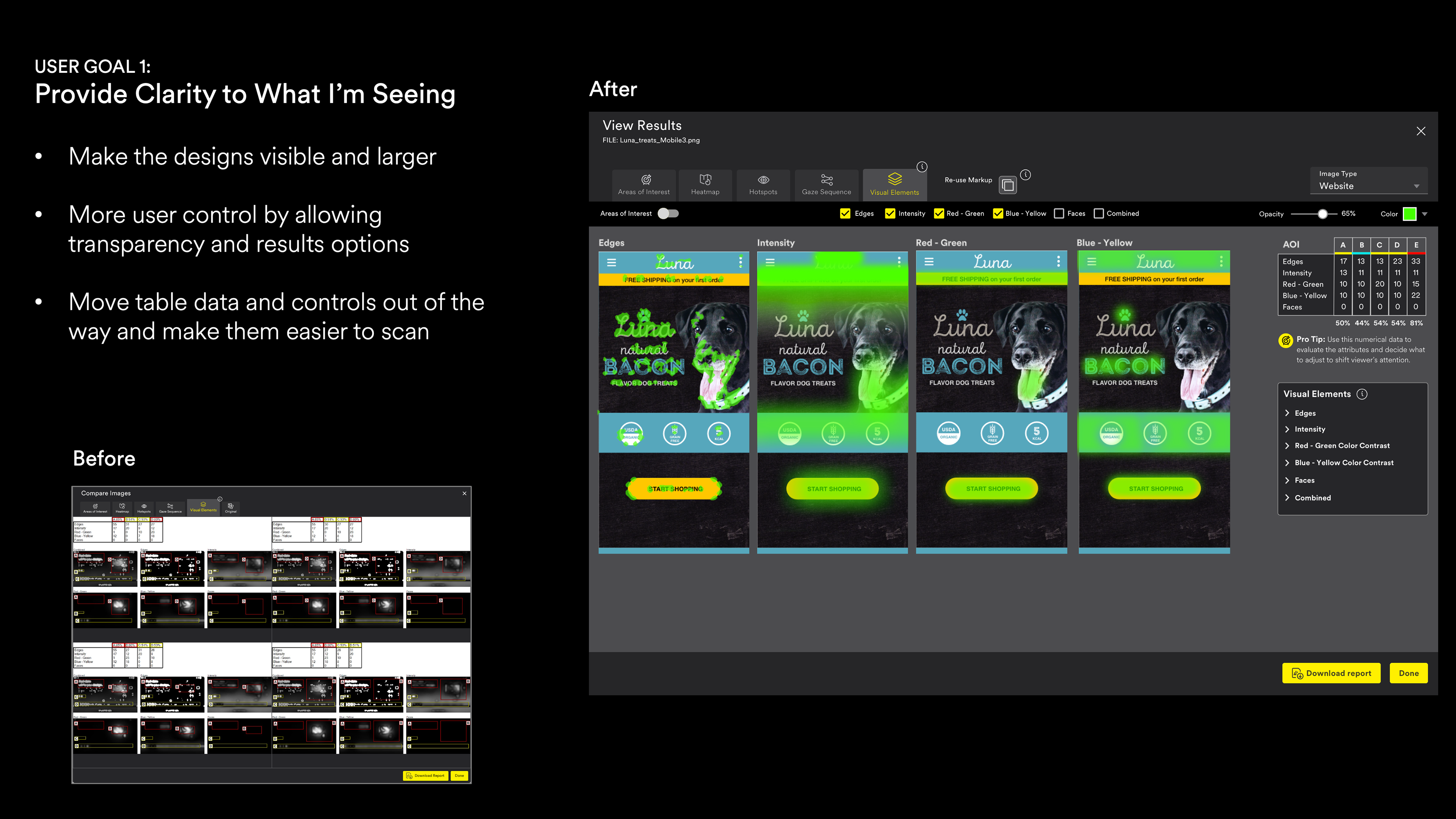
Goal #1: Enhance Data Clarity
Focus: Improving the readability of reports and information.
Metric: Task Success Rate. Measured by the user's ability to correctly interpret a report within a specific timeframe.
Focus: Improving the readability of reports and information.
Metric: Task Success Rate. Measured by the user's ability to correctly interpret a report within a specific timeframe.
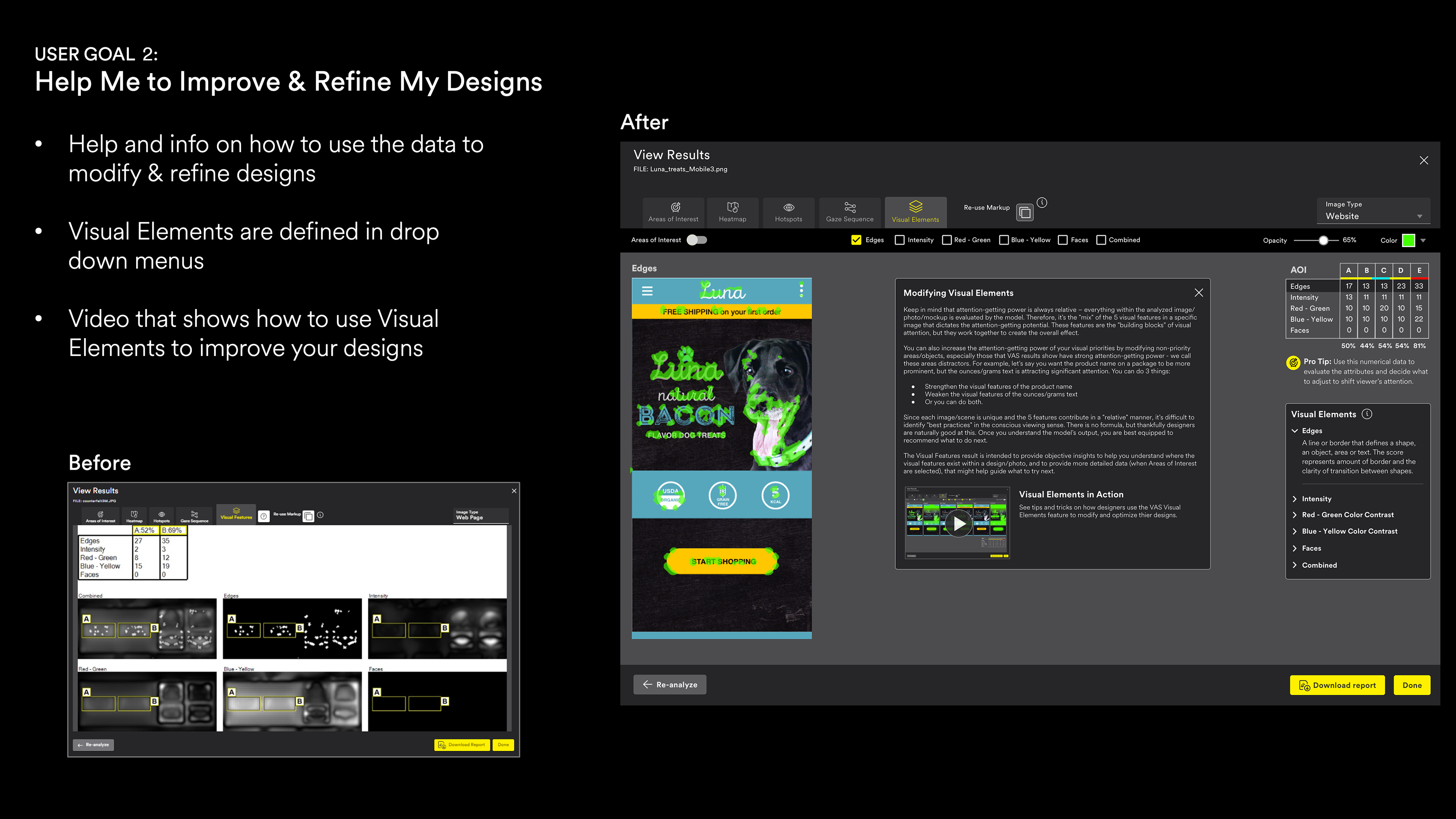
Goal #2 - Support Design Refinement
Focus: Empowering users to iterate and improve their designs intuitively.
Metric: Frequency of Use. Measured by an increase in "Saved Iterations" or the use of "Edit" features per session.
Focus: Empowering users to iterate and improve their designs intuitively.
Metric: Frequency of Use. Measured by an increase in "Saved Iterations" or the use of "Edit" features per session.
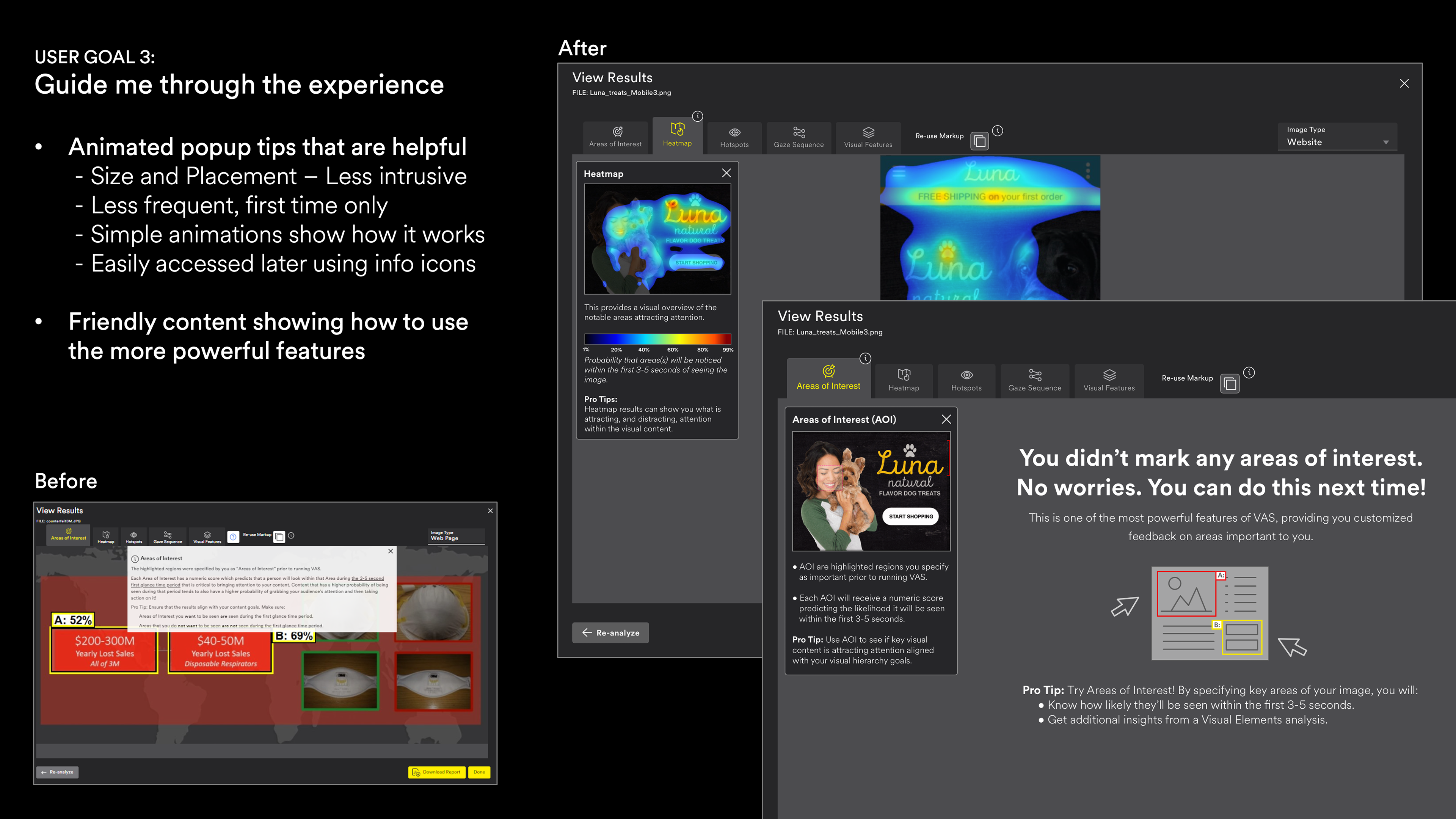
Goal #3 - Proactive User Guidance
Focus: Providing actionable tips and onboarding to maximize app utility.
Metric: Reduction in Support Tickets. Measured by a decrease in common "How-to" inquiries related to core features.
Focus: Providing actionable tips and onboarding to maximize app utility.
Metric: Reduction in Support Tickets. Measured by a decrease in common "How-to" inquiries related to core features.
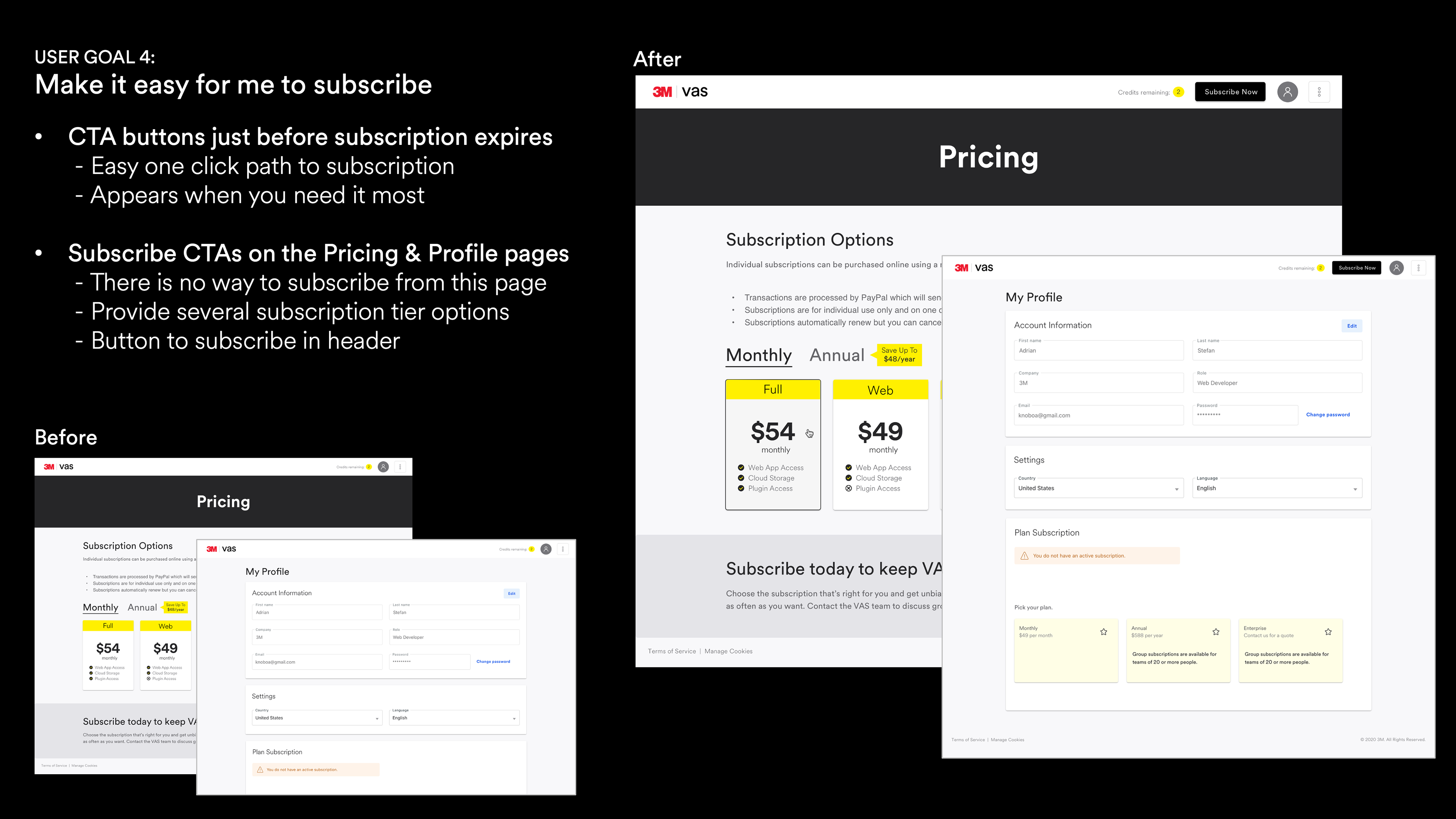
Goal #4 - Minimize Subscription Friction
Focus: Identifying and removing barriers to the checkout/upgrade flow.
Metric: Conversion Rate. Measured by the percentage of users who complete the subscription flow after visiting the pricing page.
Focus: Identifying and removing barriers to the checkout/upgrade flow.
Metric: Conversion Rate. Measured by the percentage of users who complete the subscription flow after visiting the pricing page.
Step 3: Goal Driven Design Updates
To bridge the gap between our goals and the final product, I implemented strategic design updates focused on clarity and user empowerment. I prioritized information architecture to make complex data actionable and integrated contextual guidance to help users refine their designs with confidence. Additionally, I streamlined the subscription flow to remove friction and drive conversion. These updates have been successfully integrated into the project roadmap for phased implementation.
To bridge the gap between our goals and the final product, I implemented strategic design updates focused on clarity and user empowerment. I prioritized information architecture to make complex data actionable and integrated contextual guidance to help users refine their designs with confidence. Additionally, I streamlined the subscription flow to remove friction and drive conversion. These updates have been successfully integrated into the project roadmap for phased implementation.
UX Design Updates: Aligned to Goals & Metrics
Design Refinements
Design Refinements
Design Refinements
Design Refinements
Results
The design improvements to the user onboarding and paths to subscription increased the number of subscriptions by 4X daily. This significantly improved the conversion rate from free trail to paid subscription.
The design improvements to the user onboarding and paths to subscription increased the number of subscriptions by 4X daily. This significantly improved the conversion rate from free trail to paid subscription.
These UX design improvements along with the addition of the VAS Adobe plugins increased product sales 42% year over year.
Adobe Plugins
Leading the design team on this effort, I created easy to use plugins for Adobe Photoshop, Illustrator and XD. My design methods included design research, agile design techniques for testing & refining key interactions, utilizing Adobe's Design Guidelines for plugins and creating designs using the Adobe Spectrum UXP Design Pattern Library. The team adjusted layouts and user flows to meet MVP requirements for the first phase of the app release. We then prioritized features as we did more user testing to inform the roadmap making improvements in subsequent releases.
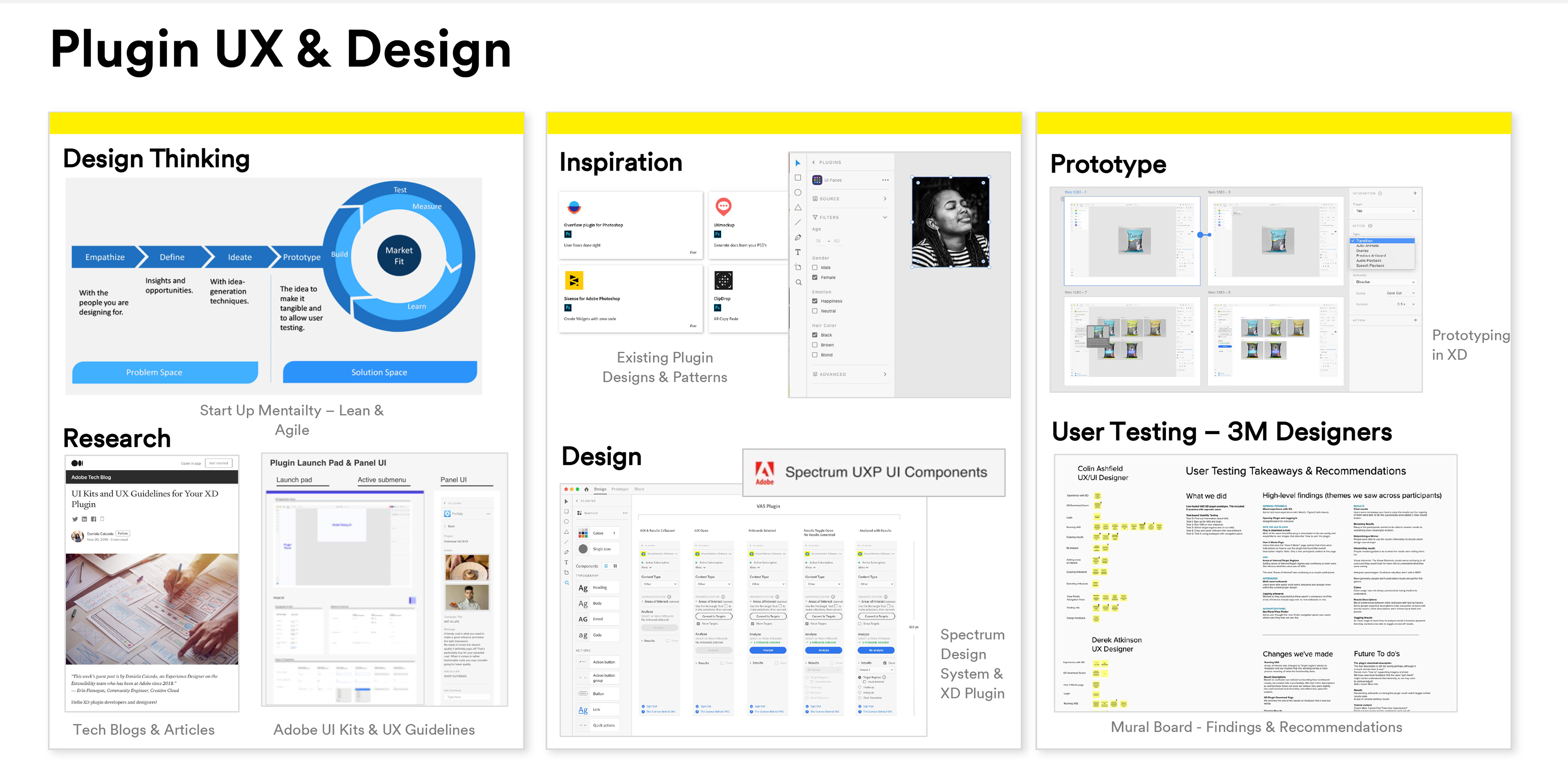
UX Design Process & Methods
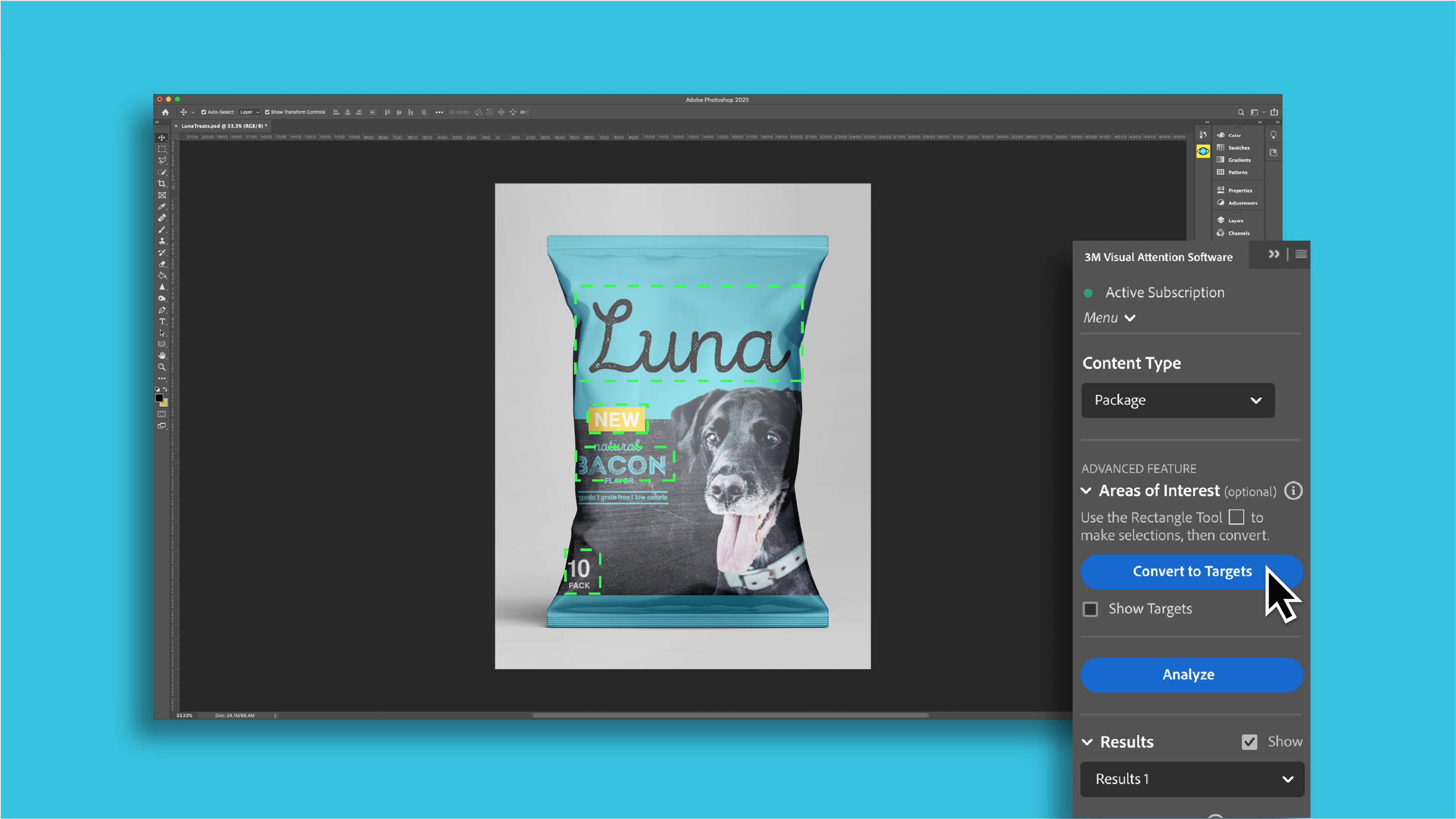
Creating ROI Targets
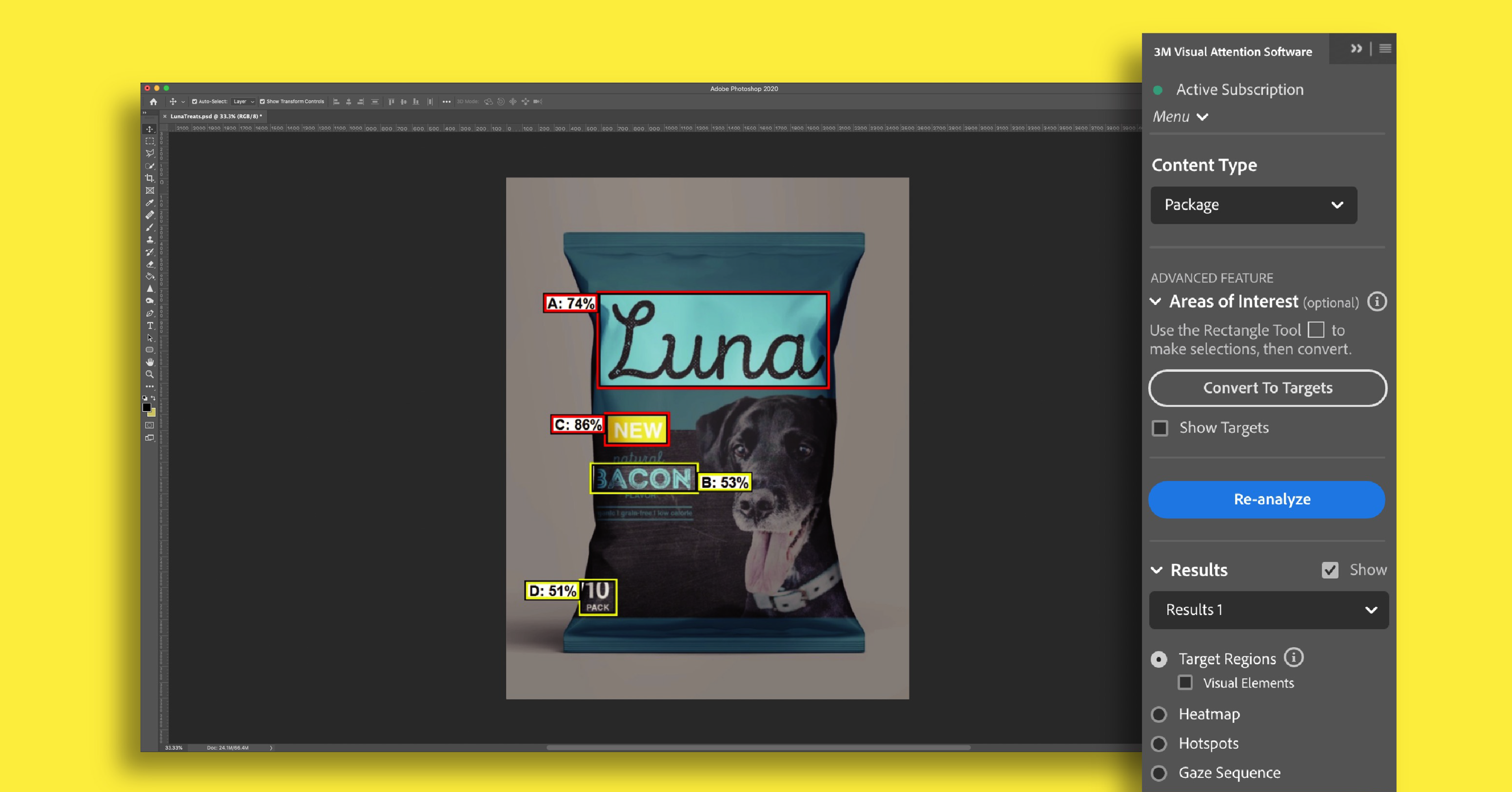
Seeing VAS Results (Target Regions)